
Journal · Planning
One week in Sardinia, a shape rather than a schedule.
Almost every week I am sent arrives as a timetable: nine o'clock this, one o'clock that, four towns on Thursday. I send back a shape instead. Seven nights in Sardinia hold less than people think, and far more than a schedule can carry.
Che Liu · 9 minute read · Last reviewed August 2026. I rewrite this each season, because opening hours, ferries and boat pricing all move.
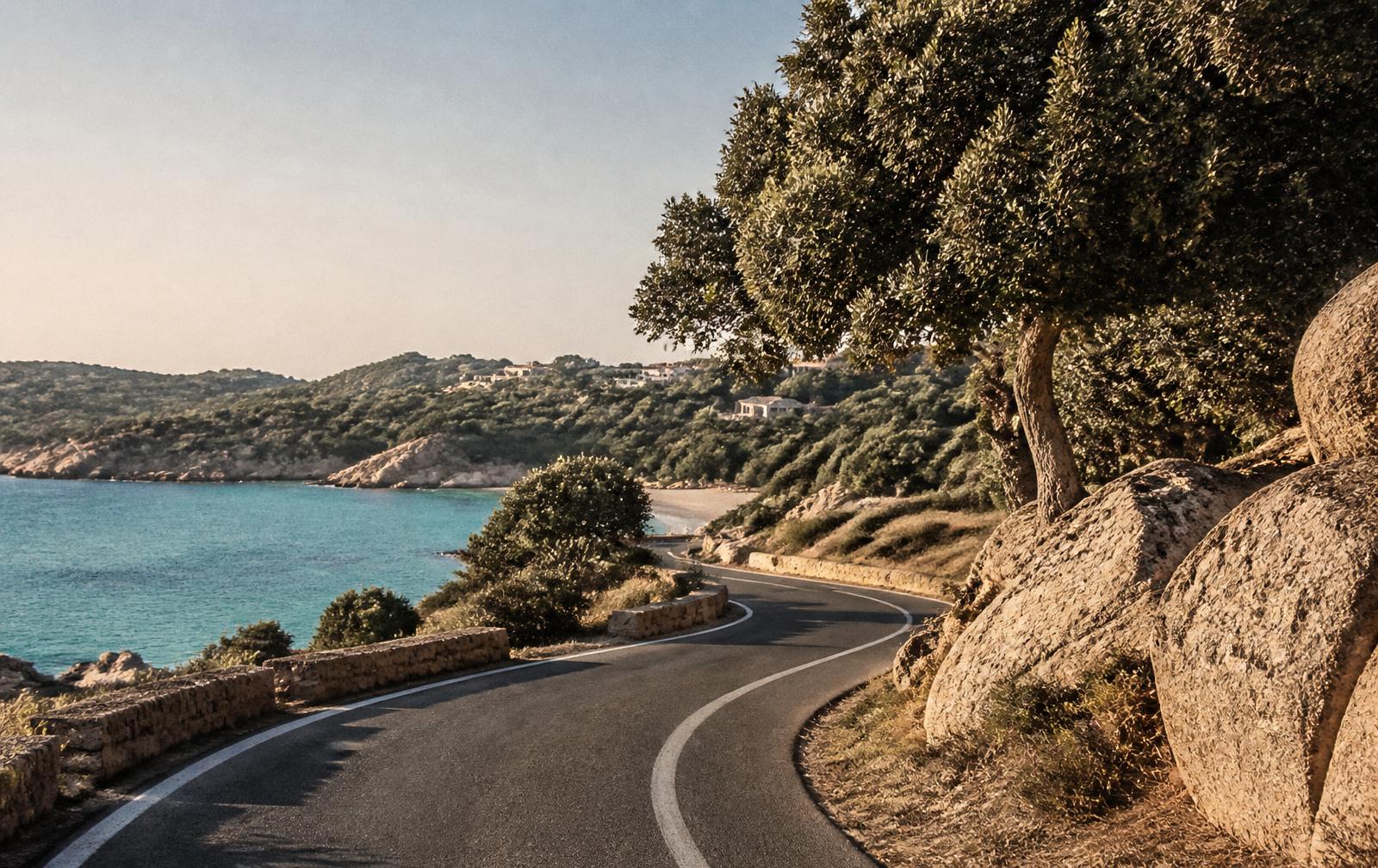
The shape, in one paragraph
One base for all seven nights. Two anchors that the week is built around, usually a private boat day and one long inland lunch. One arrival day that asks nothing of you and one departure day that is already packed. Two afternoons with nothing written in them at all. That is the whole structure, and it is deliberately loose, because the good hours in Sardinia are the ones you did not book.
Why one base
Every move costs a half day: packing, the drive, checking in, learning a new village. Do that twice in seven nights and you have spent a full day of your week on logistics. Sardinia is also larger than the map suggests, Olbia to Cagliari is over three hours, so a second base rarely buys you the variety you hoped for. In the Gallura, one house with a car reaches the whole north coast, La Maddalena, the vineyards and the granite interior inside ninety minutes.
If you genuinely want two regions, you want ten nights, not seven. I would rather write you a smaller week that works than a bigger one that leaves you tired.
The two anchors
An anchor is a day worth planning a week around. In a first Sardinian week they are almost always a private boat into the archipelago and a lunch inland that runs three hours with no menu. The boat day has to be movable, because wind decides it and not you, so I place it midweek with a spare day either side. The lunch goes on the day after the boat, when nobody wants to be back on the water.
What the seven nights actually look like
- Day one, arrival. A swim near the house, dinner within walking distance, nothing driven after dark
- Day two, close range. The nearest good coves, a market, an early evening in the village square
- Day three, the first anchor. Private boat into La Maddalena, out by eight, back by six
- Day four, empty. Deliberately. This is the day people later describe as their favorite
- Day five, inland. Vermentino above Berchidda, a shepherd's lunch, home in the late afternoon
- Day six, the second anchor or the reserve boat day if the wind moved things
- Day seven, departure. Airport, and one last coffee somewhere that is not the terminal
The two empty afternoons
These are not padding. They are where the week becomes yours: the cove you found on day two and want again, the two hour lunch that turns into four, the nap that lets you eat at nine thirty like everyone else on the island. Weeks without slack in them break on the first bad forecast, and the repair is always the same, cutting the thing you were most looking forward to.
How the day is shaped, not just the week
In June and September the useful hours are early and late. I put movement before ten and after five, and I keep the middle of the day for water, shade and a long table. From July the same rule becomes non negotiable: boats leave by eight, the popular coves need timing rather than luck, and anything involving a car park after ten in August is a mistake I only make once a season.
What I cut first
- A day trip to Cagliari from the north. Six hours of driving for a city that deserves its own trip
- Three archaeological sites in one day. One, properly, with someone who can read it
- A second boat day in the same waters, unless sailing is the point of the week
- Any dinner that needs a forty minute drive each way, twice in the same week
- The famous beach that only works at eight in the morning, when nobody wants to go at eight
What I never cut
The long lunch, the movable boat day, and the two empty afternoons. Everything else in a week is negotiable. Those four things are what people write to me about afterwards, and none of them is a sight.
How this becomes your week
Tell me your nights on the ground, your month, and what the trip is for. I put the anchors down first, then the base, then I leave the holes where they belong. You get a shape you can read in two minutes and live in for seven days, with the reservations already made and a number to call when the wind changes.
Read next
- How many days do you need, why seven nights is the number most weeks want
- Coves of the Gallura, this shape written out, day by day, as a real storyline
- When to go to Sardinia, the month decides how much daylight the shape has to work with
Ready to put a week on paper? Start your storyline → or read the rest of the journal.